MTSS Tier 1: What’s New Is the “S”
Making Quality School-Wide Programs and Instruction
Systemic by Design
“ Schools cannot successfully “intervene their way out” of weak core tier 1 instruction.”
~Unknown
You cannot read an educational publication, review a conference agenda, or scroll through social media without seeing Multi-Tiered Systems of Support (MTSS) as a topic of discussion. MTSS and Artificial Intelligence dominate the professional learning landscape and, in my opinion, rightfully so.
.jpg)
Multi-Tiered Systems of Support
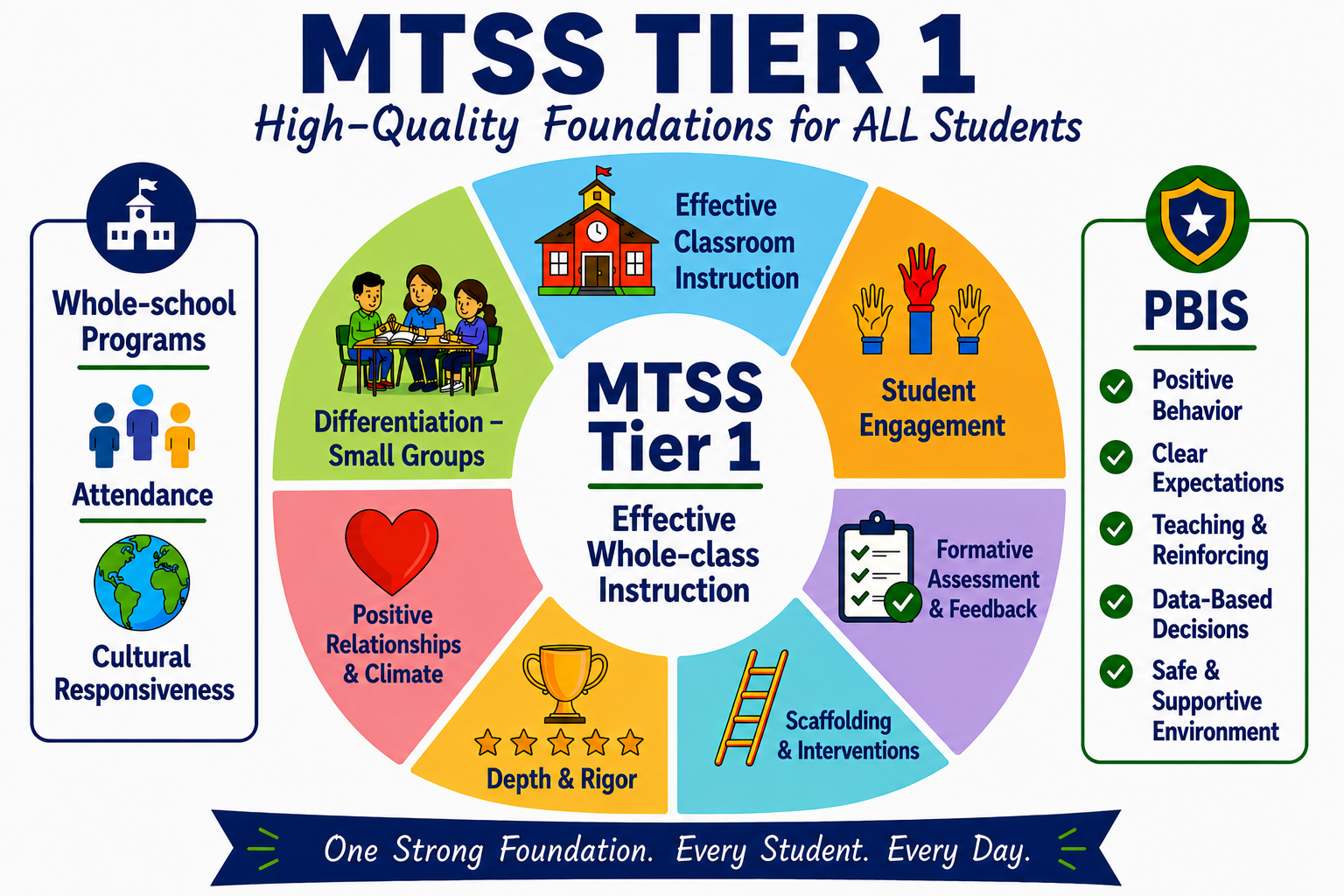
MTSS Tier 1 is the new name for the umbrella under which a quality school lives. “Quality” is a function of two coordinated elements: 1) School-wide Systems and 2) Effective Whole-Class Instructional Design. What’s new is the first “S” in MTSS: Systemic by design.
MTSS morphed from the Response-to-Intervention (RTI) framework into a comprehensive school-wide and classroom support umbrella. MTSS isn’t a new thing. Instead, it is a compiled, cohesive articulation of previously siloed components of our educational landscape. Each component itself is highly effective; when used in concert, the results are powerful. I’ll leave the MTSS system as a whole for a later discussion and take a closer look at Tier 1 within the system.
MTSS Tier 1: School-Wide Systems
Similar to Maslow’s hierarchy of human needs, student success in school follows a hierarchy as well. Effective whole-class instruction rests on the foundational elements of a school-wide system of support. Without these foundational elements, the effectiveness of classroom instruction is muted.
Contrary to common belief, MTSS Tier 1 is not exclusively about whole-class instruction. A significant part of it is, but the ‘Systems’ in Multi-Tiered Systems of Support include school-wide components as well. At the foundation of these school-wide elements outside the classroom are two critical components: an Effective Positive Behavior System and a Student Attendance System.
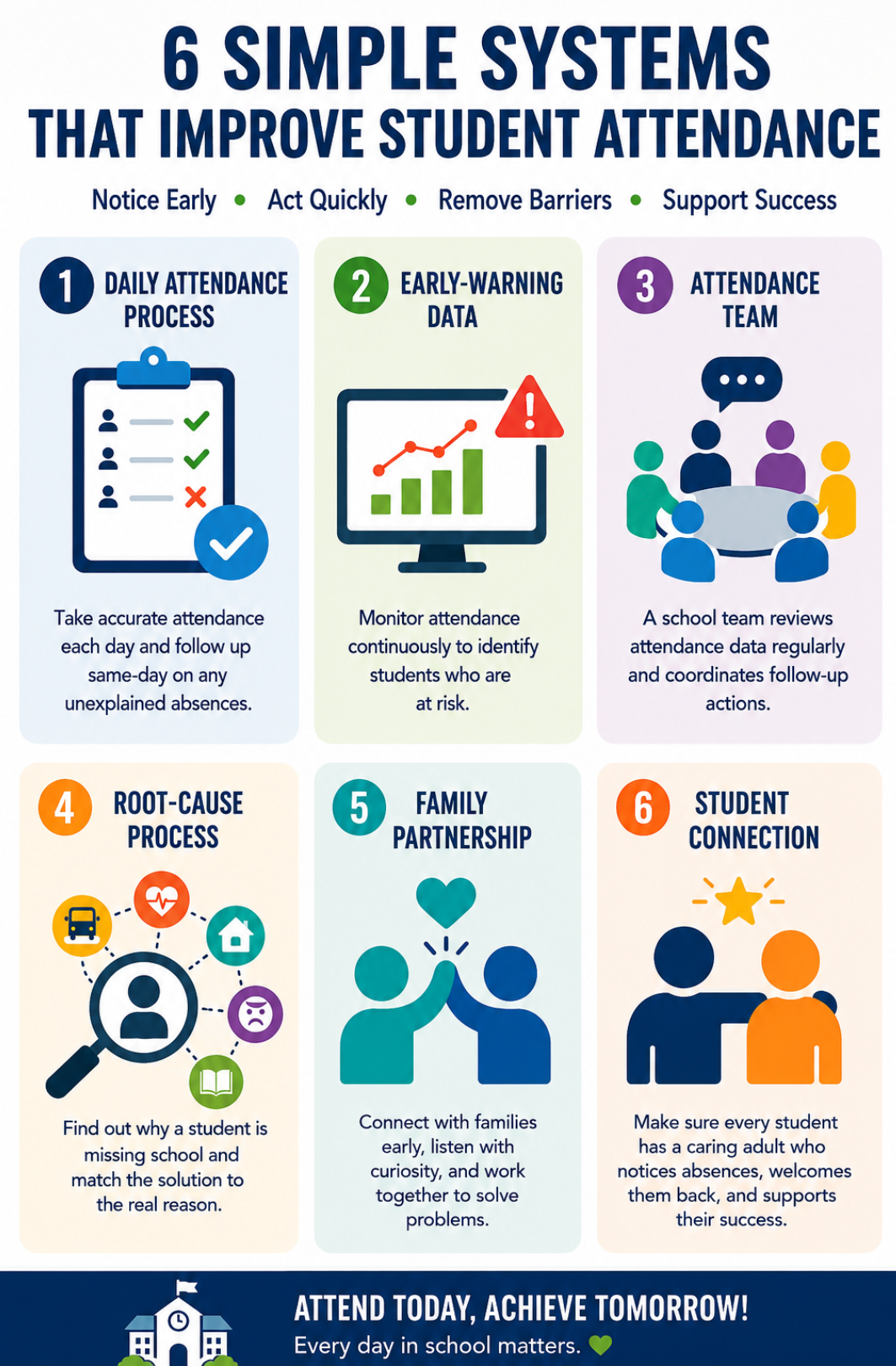
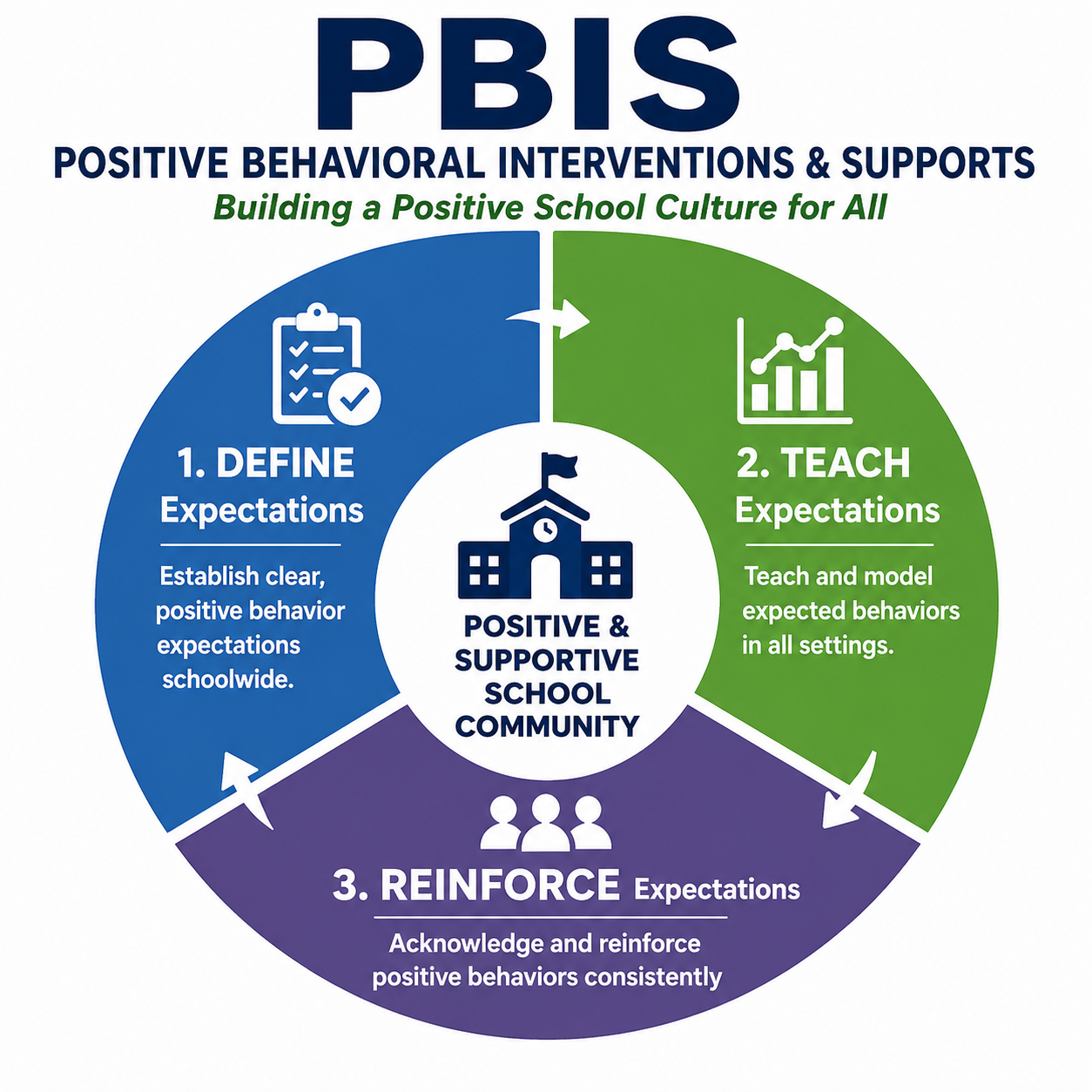
Atop PBIS and attendance are two other important elements of the school-wide system: 1) cultural responsiveness and belonging, and 2) school-wide opportunities for students to engage outside the classroom through co-curricular activities, clubs, events, teams, causes, and more.
Together, these school-wide systems support student attendance, engagement, and overall experience in the school environment—all of which contribute positively to students’ mindsets in the classroom. With these school-wide systems in place, we can now focus on the second branch of MTSS Tier 1: effective whole-class instructional design.
MTSS Tier 1: Effective Whole-Class Instructional Design
When you think of effective instruction, what comes to mind? Make a quick mental list. Well, the attributes you just rattled off are, for the most part, the same elements found in an effective MTSS Tier 1 environment.
MTSS Tier 1 is quality, effective, whole-class, data-informed instructional design. What is different is the guaranteed, systemic use of these attributes of effective instruction, rather than an à la carte approach. Moreover, the use of these effective, research-based strategies is informed by data the classroom teacher has gathered about individual students over the previous few weeks. Now that’s useful data for differentiating instruction.
How Do I Improve My School’s MTSS Tier 1 Implementation?
The answer: professional development and instructional coaching focused on individual, research-based learning strategies for whole-class instruction.
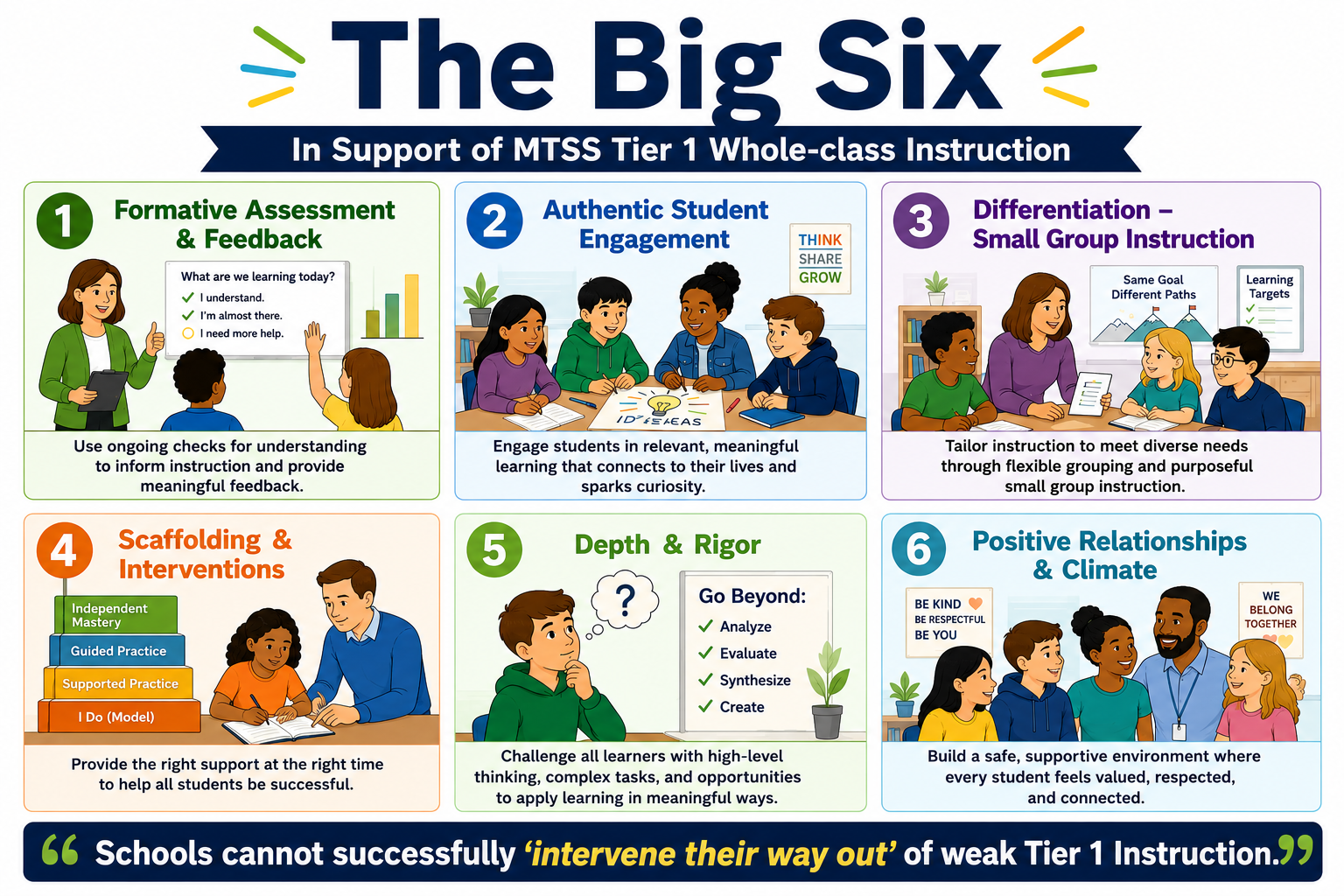
Positive Relationships & Climate
Research consistently demonstrates that positive teacher-student relationships are foundational to student success. Hattie’s meta-analyses assign an effect size of 0.72 to teacher-student relationships, highlighting their significant impact on student achievement (Hattie et al., 2023).
Effective educators demonstrate care, trust, and respect while taking the time to know students as both learners and individuals. Students’ attitudes and perceptions shape the mindsets they bring to learning. MTSS Tier 1 is about creating emotionally safe classrooms that intentionally foster a strong sense of belonging and connectedness. In these classrooms, mistakes are embraced as opportunities for learning, growth, and success. At the same time, high expectations are maintained through appropriate scaffolds and differentiated instructional design. Together, these approaches create a positive learning environment that increases student engagement, motivation, achievement, and overall well-being.
Student Engagement
Although Hattie does not identify “student engagement” as a single measurable influence with its own effect size, many of the highest-impact instructional practices are those that actively engage students in metacognition (0.69), discussion (0.82), questioning (0.49), and collaboration (0.52) (Hattie et al., 2023).
.jpg)
Formative Assessment & Feedback
Formative assessment and feedback are best practices that continuously guide teaching and learning. Too often, feedback is given minimal attention or skipped altogether.
Effective instruction frequently checks for understanding, gathers evidence from all students, and ultimately identifies misconceptions in real time, and adjusts instruction accordingly. Students are given opportunities to revise and improve their work throughout the learning process. (This is where the useful data comes from!)
Simply put, high-quality feedback is timely, specific, and actionable, giving both teachers and students a clear understanding of what has been mastered and what needs further attention.
When used in a planned, coordinated manner, formative assessment and feedback create an ongoing cycle of reflection, adjustment, and growth that improves student achievement.
Differentiation & Small Groups
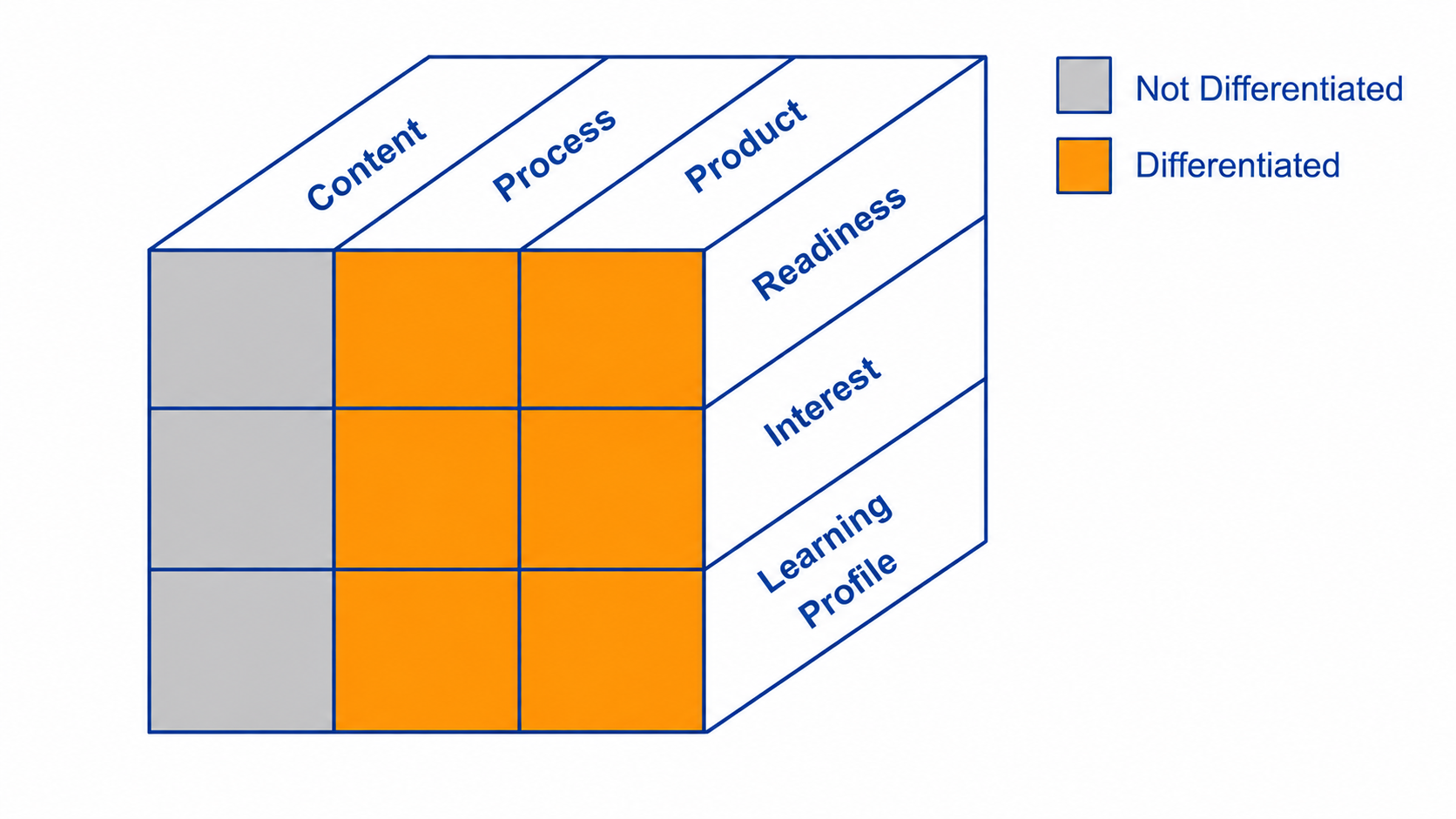
Differentiated instruction and flexible small-group instruction improve student achievement by aligning teaching with students’ readiness levels, interests, and learning needs. Effective instruction uses ongoing formative assessment to adapt processes, products, and levels of support while grouping students flexibly based on specific learning goals rather than fixed ability levels.
Implemented effectively, differentiation and flexible grouping provide equitable access to rigorous instruction while maintaining high expectations.
.jpg)
Scaffolded Support and Interventions
Instructional scaffolding and interventions provide the targeted support students need to achieve high levels of learning. Scaffolding offers temporary, intentional supports—such as modeling, guided practice, questioning, and visual tools—that help students master challenging concepts while gradually building independence.
Interventions provide timely, evidence-based instruction tailored to specific learning needs and informed by ongoing assessment. Together, these practices maintain high expectations while ensuring appropriate support, preventing learning gaps from widening, accelerating student growth, and promoting success for all students.
Interestingly, MTSS itself is a scaffolded support system embedded with systemic interventions. Research is very clear on the effectiveness of such approaches. While MTSS is not yet reported as a distinct influence in Hattie’s work, Response to Intervention (RTI) has a significant effect size of 1.08—one of the highest among the more than 200 influences reported (Hattie et al., 2023).
Questioning & Discussion
Research consistently identifies high-quality questioning and classroom discussion as among the most powerful instructional practices for improving student learning. Effective instruction uses purposeful questions that move beyond recall and require students to explain, analyze, evaluate, and apply their knowledge. Structured classroom discussions actively engage all students in reasoning, defending ideas with evidence, and learning from multiple perspectives.
Frequent questioning also serves as an informal formative assessment, revealing misconceptions and informing instructional adjustments. Together, rigorous questioning and meaningful discussion promote deeper understanding, critical thinking, and authentic student engagement.
Depth of Knowledge and Instructional Rigor
High-quality learning challenges students to think beyond simple recall by explaining and justifying their reasoning, applying knowledge in new contexts, analyzing ideas, evaluating evidence, and creating original solutions. Students engage in productive struggle with appropriate teacher support, while frequent, targeted feedback helps refine their thinking and deepen their understanding.
Old-Fashioned, Quality, Effective Schools
Just as libraries are now media centers and recess is now a brain break, the programs and practices of a quality, effective school are now part of MTSS. More specifically, a key part of Tier 1 is good, old-fashioned, quality classroom instruction.
Implementing, supporting, and improving MTSS Tier 1 in the classroom is a function of professional learning and instructional coaching focused on effective, research-based instructional strategies.
The individual strategies aren’t new. Again, what’s new is the first “S” in MTSS: Systems. Most importantly, the term “Systems” implies—and arguably mandates—that the research-supported, tried-and-true whole-class instructional strategies described above be implemented regularly, by design, and with fidelity across all classrooms.
So, if you want to improve the effectiveness of MTSS Tier 1, work to improve overall classroom instruction and ensure “S”ystemic implementation. And that requires meaningful professional learning for teachers and administrators on the Big Six instructional strategies followed by embedded instructional coaching at the individual classroom level.
References: Hattie, J., Fisher, D., & Frey, N. (2023). Visible learning: The sequel. Corwin.
Frequently Asked Questions About MTSS Tier 1
1. What is MTSS Tier 1?
MTSS Tier 1 is the universal foundation of a Multi-Tiered System of Supports. It includes the school-wide systems, classroom practices, and instructional supports designed to benefit all students before additional Tier 2 or Tier 3 interventions are needed.
2. What does the “S” in MTSS mean?
The “S” in MTSS stands for Systems. In this blog, the key point is that strong Tier 1 instruction and school-wide supports should not happen randomly or occasionally. They should be implemented systemically, by design, and with fidelity across classrooms.
3. Why is Tier 1 so important in MTSS?
Tier 1 is important because it serves as the foundation for all students. When Tier 1 is weak, schools often rely too heavily on interventions to solve problems that could have been reduced through stronger core instruction and school-wide systems.
4. Is MTSS Tier 1 only about classroom instruction?
No. MTSS Tier 1 includes effective whole-class instruction, but it also includes school-wide systems such as attendance, PBIS, cultural responsiveness, belonging, and opportunities for students to engage outside the classroom.
5. How does attendance connect to MTSS Tier 1?
Attendance is a foundational part of MTSS Tier 1 because students need to be present to benefit from classroom instruction, relationships, feedback, and school-wide supports. A strong attendance system helps schools identify barriers early and respond before disengagement grows.
6. How does PBIS support MTSS Tier 1?
PBIS supports MTSS Tier 1 by creating school-wide expectations, reinforcing positive behavior, and helping build a safe and supportive school climate. Effective PBIS systems help students, educators, and staff work within a common set of expectations.
7. What are examples of effective MTSS Tier 1 instructional strategies?
Examples include positive teacher-student relationships, student engagement, formative assessment and feedback, differentiation, flexible small groups, scaffolded support, questioning, discussion, and rigorous learning tasks.
8. Why are teacher-student relationships part of Tier 1 instruction?
Teacher-student relationships are part of Tier 1 instruction because students’ attitudes, perceptions, and sense of belonging influence how they approach learning. Strong relationships help create emotionally safe classrooms where students are more willing to engage, take risks, and persist.
9. How can schools improve MTSS Tier 1 implementation?
Schools can improve MTSS Tier 1 implementation through meaningful professional development, instructional coaching, data-informed planning, and consistent use of research-based instructional strategies across classrooms.
10. What is the biggest takeaway about MTSS Tier 1?
The biggest takeaway is that MTSS Tier 1 is not a new program or isolated initiative. It is the systemic implementation of quality school-wide supports and effective whole-class instruction so that strong practices happen regularly, intentionally, and across the school.