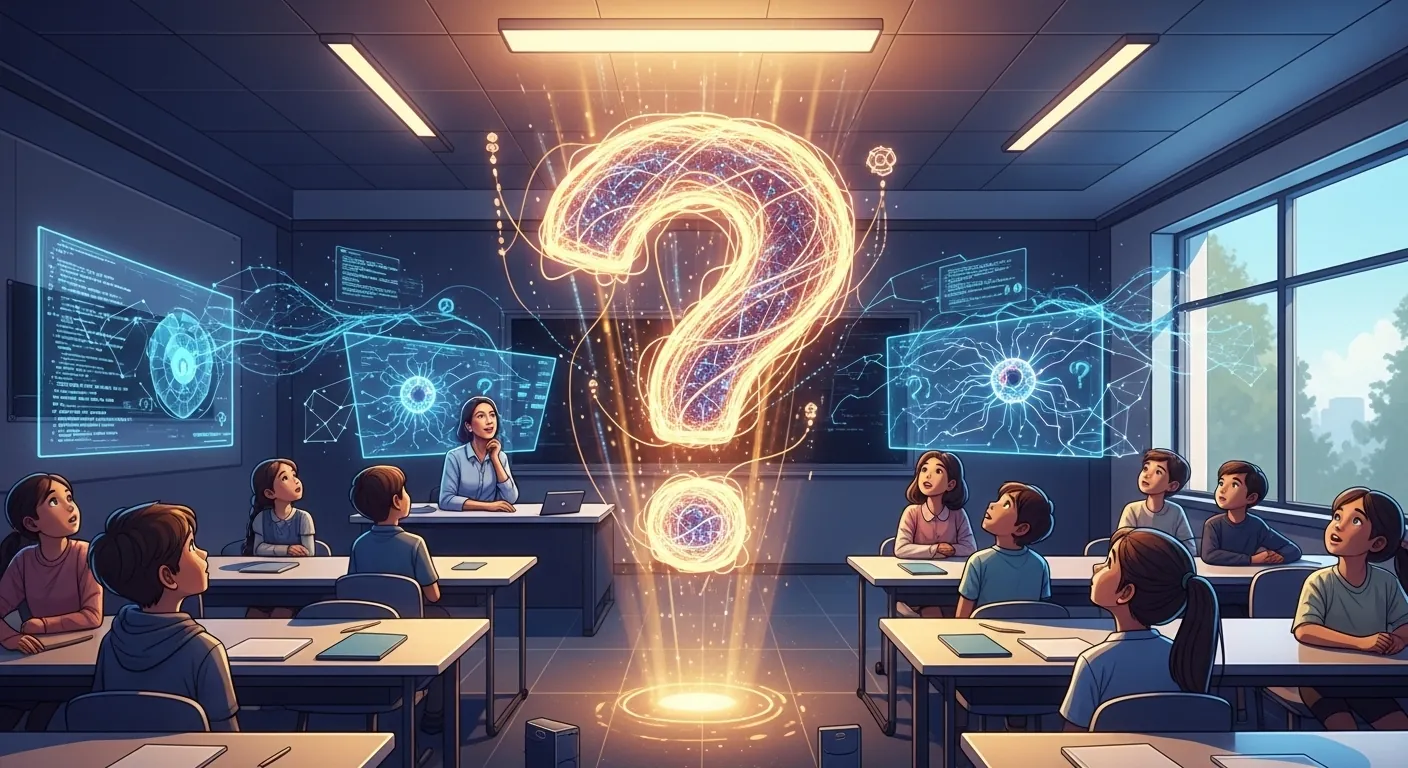
Educators are experiencing some unprecedented changes in their classrooms: The “Invasion” of Artificial Intelligence or as it is referred to: AI. You have heard of AI or even have dabbled in it here and there, but it’s time to get ready because this technological shift is here to stay and will change how we as educators teach our students and see the future of education.
AI has become second nature not only in our daily lives (Hello Alexa!) but also in our workforce. Being in education, we have seen such a massive shift in how technology runs our classrooms. More importantly, students are utilizing technology, more specifically AI, to complete and/or assist with their coursework. We know that students need the skills to adapt to the current and ever quickly changing technology, but we still need them to do the actual work. With that being said, giving students the autonomy to produce their own work with and without AI is critical. So how do we make and hold our students accountable for submitting their own work, yet accepting AI as a learning tool to broaden ours and their educational horizons?
As an adjunct English professor at a local community college, AI has become a challenge for me and I do not say that lightly. Not only do I need to educate my students who are living in unprecedented times, but I also must shift my instructional approach as an educator to meet them where they stand in the ever changing technological shift. Students are currently using AI for their everyday lives but mostly, they are looking to AI to assist them with their educational journey. So how can I help use AI for good?
One example is to allow students to create their own original work and then use AI as a tool to “clean it up.” This activity is important as it shows students how to evaluate their work vs. AI’s suggestion. It gives them the opportunity to distinguish the difference between their authentic writing and that of a computer. Teachers can also opt to have students use this as an opportunity to effectively combine both pieces of writing. By using their critical thinking skills, students must choose what works and keeps the authenticities of their work and what sounds “too AI”.
Another great strategy is to have students submit their writing pieces to AI for evaluation. The truth hurts and AI tools, such as ChatGPT, will not hold back. I have used this in my own classroom and the feedback has helped my students tremendously. It is like having another “pair of eyes” reading their work and giving them tips for improvement. With this students can make adjustments to their paper and work to improve their writing. It becomes a win-win!
Teaching our students responsible use and purpose of AI is the most telling of a great educator. I, myself, have reflected often on how I will incorporate it within my writing course. This has caused me to rack my brain with the who, what, when, and how, but, in the end, I have decided that instead of fighting this losing, uphill battle, I have to embrace it and start to craft my lessons and classroom activities to effectively incorporate AI. And knowing that many educators are either floating fiercely toward AI or fearfully away, we at Inspired Instruction, are committed to support educators through thoughtful partnership and delivery of research-based, customized solutions that elevate student success. A great workshop to consider is Empowering Educators: Integrating AI Into the Classroom & Safeguarding Academic Integrity.
The reality is that AI literacy is essential for our students' future and as we navigate the waves of AI, it is important to remember that as educators we are also responsible to change, learn and grow as individuals. In order to help our students, learning AI or jumping on the AI “bandwagon” is no different. We need to embrace AI in the classroom, not as the devil in disguise, but as a necessary tool our students should master in order to compete in the ever changing workforce. Much like the skills, learning goals, and concepts we find embedded within the New Jersey Learning Standards, AI can help our students be successful.
Overall, our goal as educators is to help our students learn, grow and be critical thinkers who will become our future workforce and embracing AI is no different. Much like the cliche saying, “just rip off the band-aid,” it is time to do just that and embrace AI in your classroom.