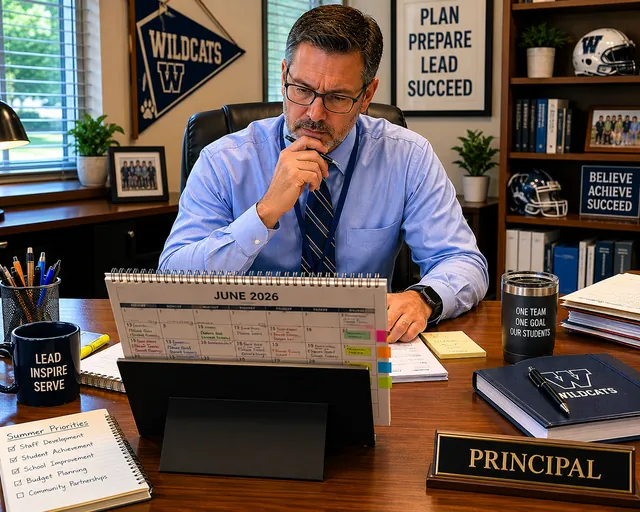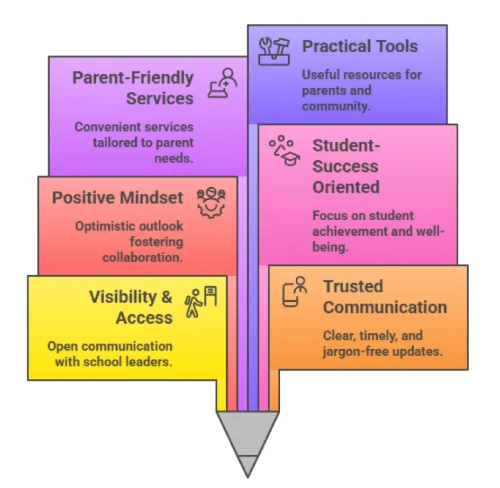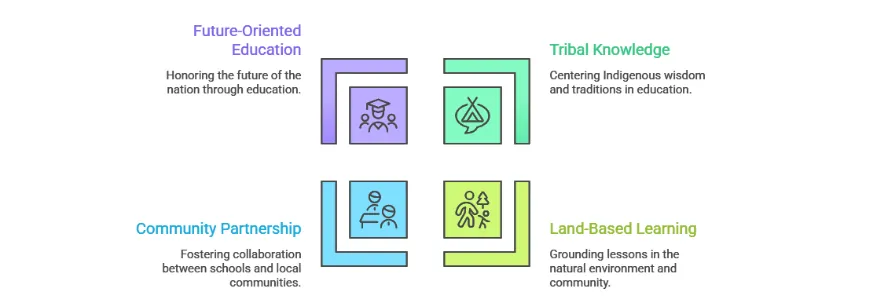
Let's be honest: Leading a Bureau of Indian Education (BIE) school isn't just a job; it’s a marathon where the rules seem to change with each step. Between the long rural commutes and the mountain of paperwork, it’s easy to feel like the system is designed to keep school leaders away from the classrooms. However, those in the trenches know the truth: these schools are the heart of their communities, and it takes real persistence to keep them moving forward.
The best part? You don’t need to find extra room in the budget or write another massive manual to change the energy on campus. You just need a clearer sense of direction. It starts with a framework that was built for the Tribal Nations served: The 4 R’s—Respect, Relevance, Reciprocity, and Responsibility.
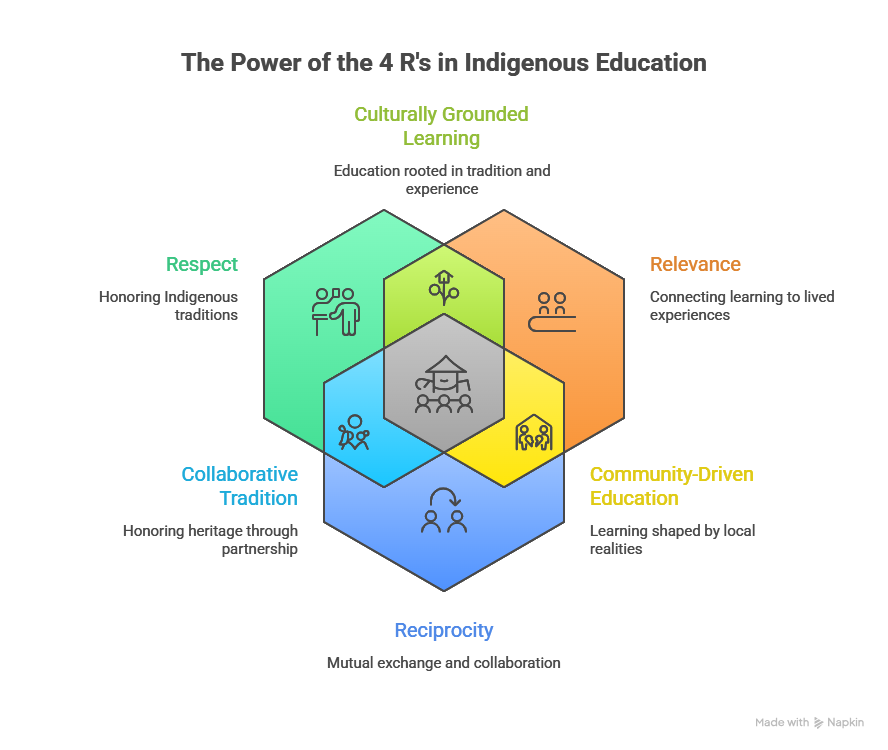
The 4 R's: Elevating Excellence in Tribal Learning Communities
First introduced by Kirkness and Barnhardt (1991), the 4 R’s are far more than just theory. They serve as the actual groundwork for turning a struggling school into a place where the local community finally feels seen, heard, and at home
1. Respect: It's Already There
Respect starts with the understanding that Indigenous knowledge is not an add-on, but it is just as rigorous as anything in a Western textbook. In a BIE setting, this means moving beyond one-off lessons in November and ensuring our students see their own culture reflected in everything they learn, all year round.
- The Move: Instead of a generic biology lab, let's get students using Traditional Ecological Knowledge (TEK) to study local agriculture and plant cultivation (University of Arizona, n.d.).
- The Leader’s Role: Encourage teachers to invite Tribal Elders into the classroom, treating their experiences like the specialists they are. When they walk into a classroom, give them the same professional deference you'd give any state-certified expert.
2. Relevance: Open Up The Classroom
Kids shouldn't have to choose between their culture and their education. When we bring the local environment into our lessons, we aren't just 'doing an activity'—we’re showing them that their community’s history is just as valuable as anything in a modern curriculum. That is how we make school mean something to them.
- The Move: Use the geometric patterns of traditional weaving or beadwork to teach math, or use local water rights history to ground a social studies unit.
- The Leader's Role: Give your teachers the "green light" to localize their lessons. When school actually looks like their life, you’ll see chronic absenteeism start to drop on its own (Meester, 2025).
3. Reciprocity: The Two-Way Street
Education shouldn't be a one-way dump of information. Reciprocity means the school listens as much as it speaks.
- The Move: Don't just assign homework; have students tackle real community problems and present their solutions to the Tribal Council.
- The Leader’s Role: Flip your staff meetings. Instead of "experts" lecturing your team, create space for teachers and community members to share knowledge as equals.
4. Responsibility: More Than Just a Data Point
We aren't just raising test-takers; we’re raising the next generation of Tribal leaders. We need to support the whole child, not just the part that gets us data points.
- The Move: Prioritize wellness. Align the school schedule with local ceremonies or seasonal activities so students don't have to choose between their education and their culture.
The Leader’s Role: Don't let the weight of federal compliance bury your staff. You’re there to handle the red tape so they can stay focused on the mission of serving the Nation’s future (Bureau of Indian Education [BIE], n.d.).
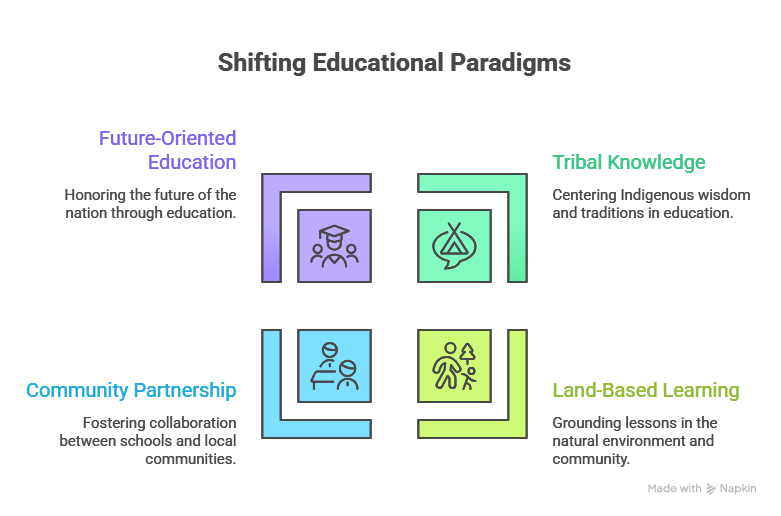
Your "Monday Morning" Quick-Start
Don't wait for a district meeting to start this. Here’s how to kick things off tomorrow:
- Walk the Halls: Do the walls reflect the faces and native languages of your Nation, or a generic office building?
- Invite an Elder: Is there a local expert who could consult on a unit this month?
- Ask the Kids: "How does this lesson help your community?" If they can't answer, it’s time for a 4 R's tune-up.
- Pause the Lecture: Try 15 minutes of student-led dialogue instead of a one-way presentation.
Compliance is part of the job, but it shouldn't overshadow the work in the classroom. Lead with respect and stand in responsibility to the community.
____________________________________________________________________________________________
References
Bureau of Indian Education. (n.d.). Strategic direction: Summary of vision, mission, and core values. https://www.bie.edu/strategic-direction/summary-vision-mission-core-values
Kirkness, V., & Barnhardt, R. (1991, May). First Nations and Higher Education: The Four R’s - Respect, Relevance, Reciprocity, Responsibility. https://www.uaf.edu/ankn/publications/collective-works-of-ray-b/Four-Rs-2nd-Ed.pdf
Meester, D. (2025, December 16). When punishment fails: What Arizona can learn from tribal approaches to truancy. Arizona State Law Journal. https://arizonastatelawjournal.org/2025/12/16/when-punishment-fails-what-arizona-can-learn-from-tribal-approaches-to-truancy/
University of Arizona. (n.d.). Sustainable Bioeconomy for Arid Regions (SBAR): K-12 education resources. Arizona Environment. environment.arizona.edu